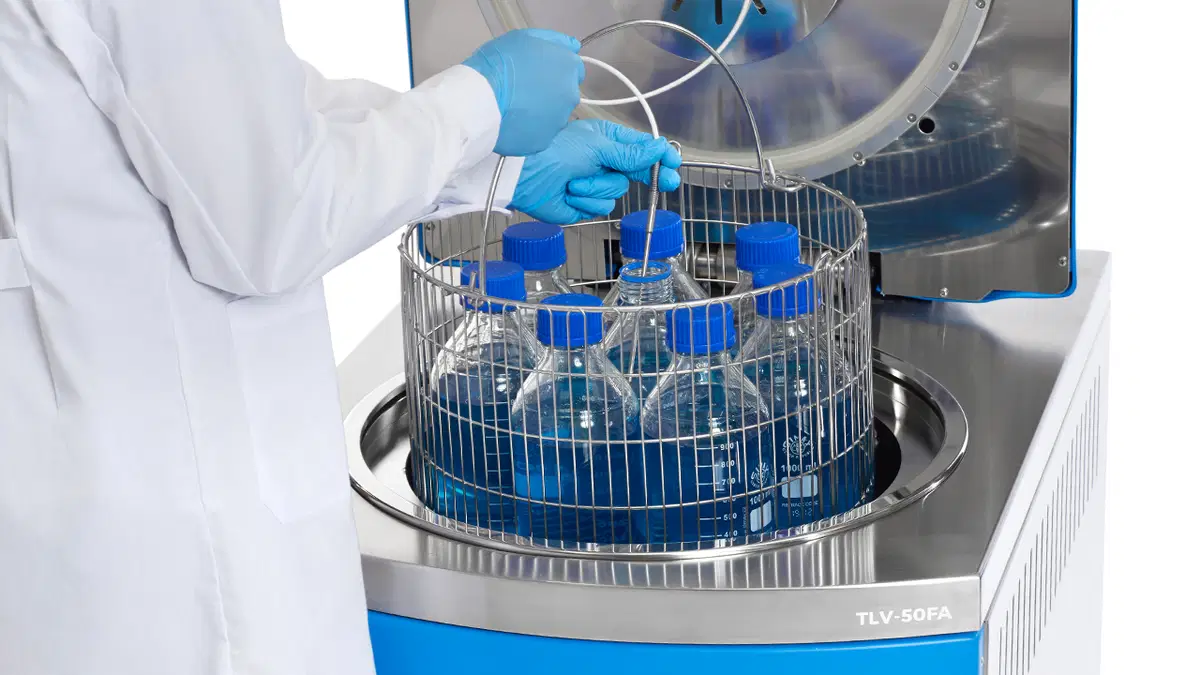
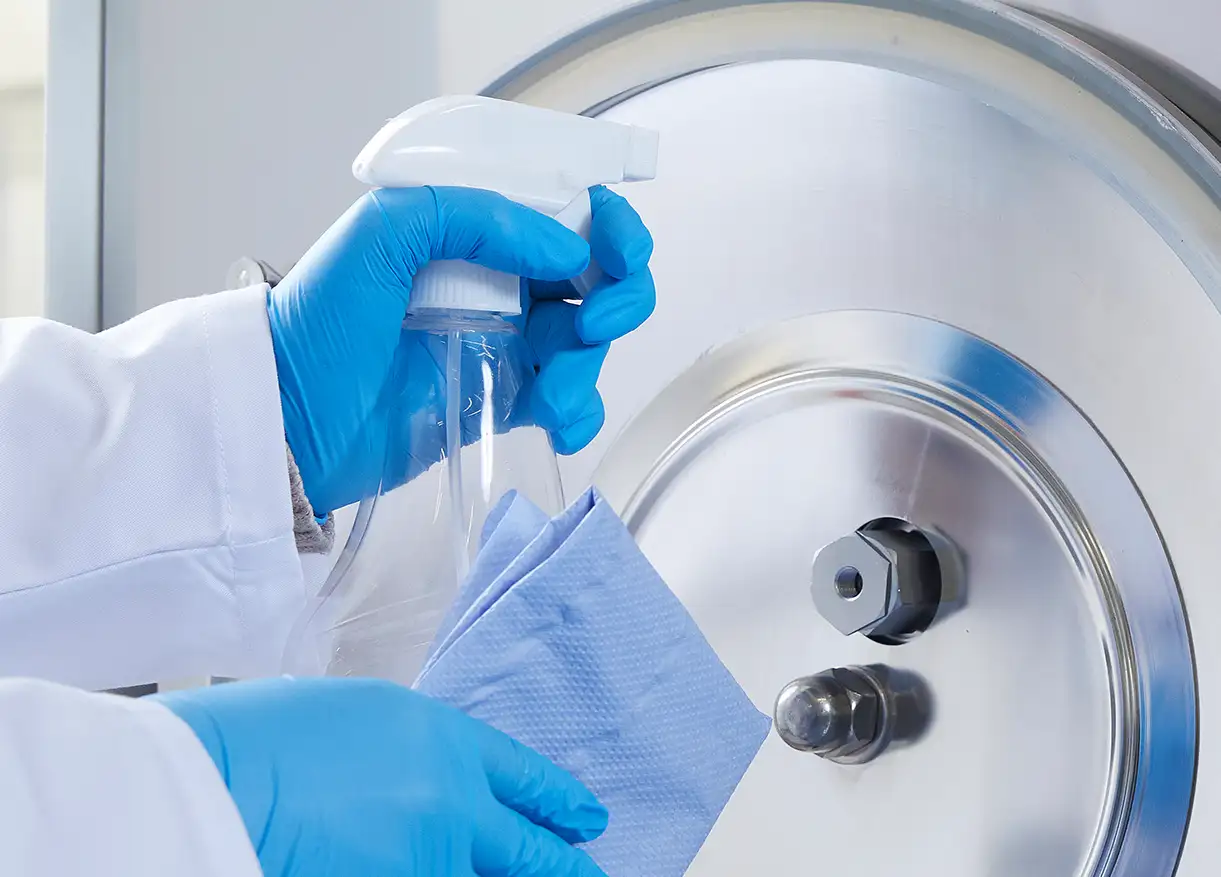
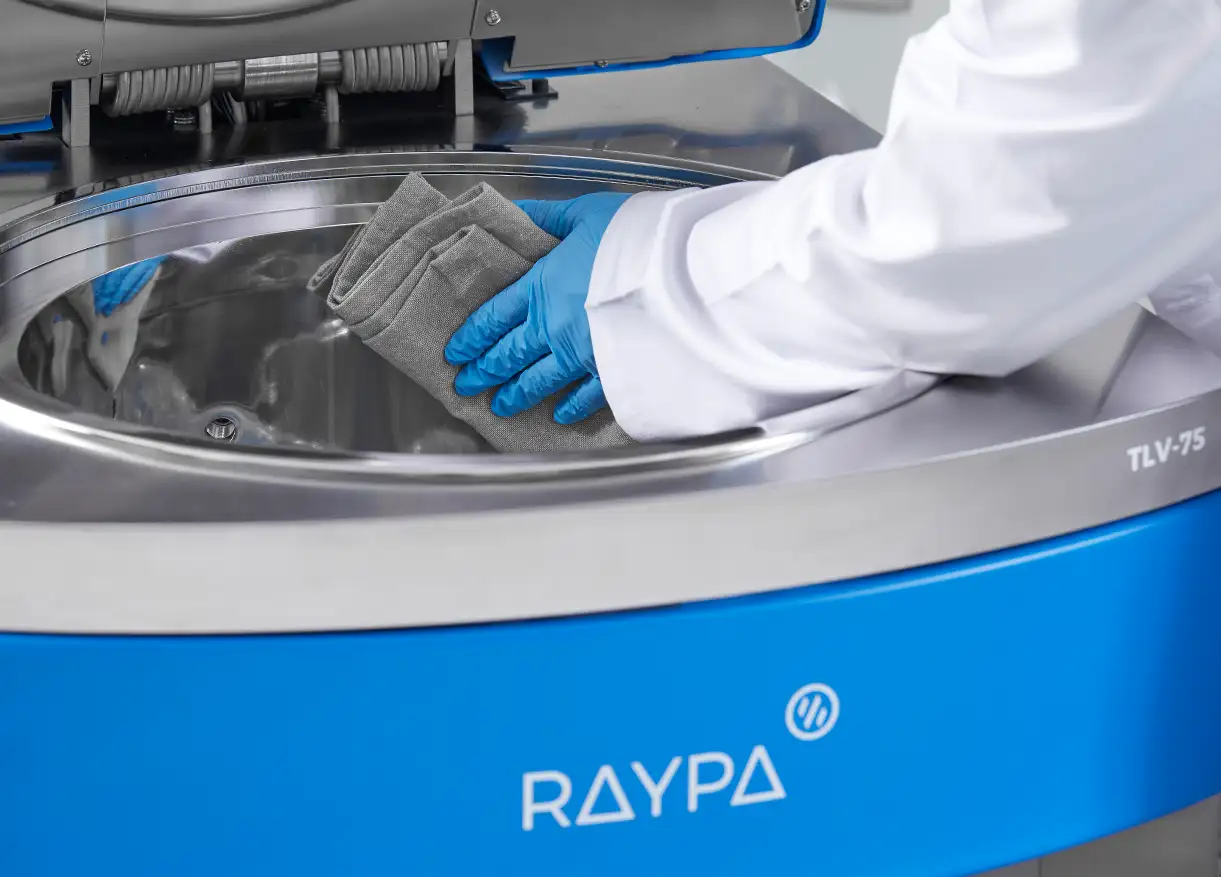
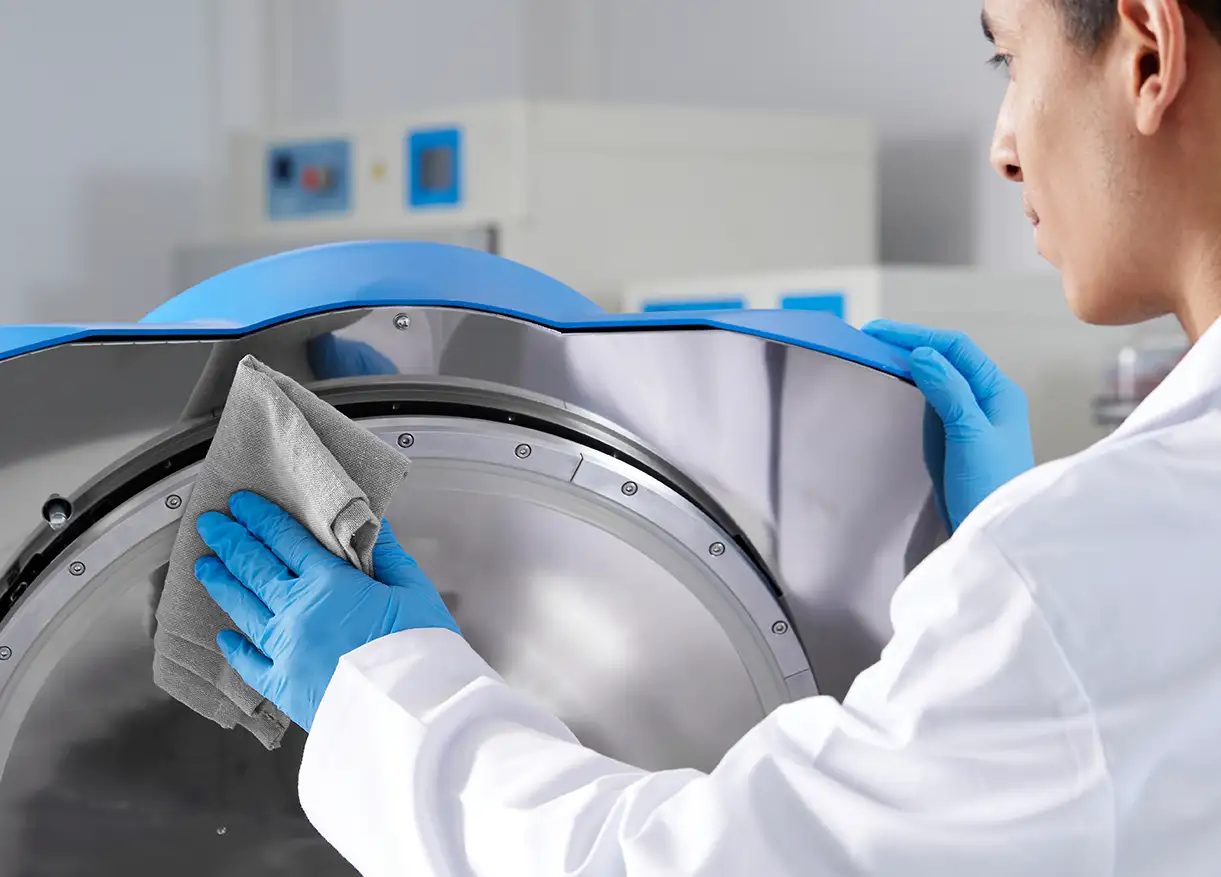
With over 50 years of experience manufacturing autoclaves, RAYPA introduces the innovative TLV-DUAL Series, designed to provide advanced sterilization of both liquid and solid loads.
This cutting-edge series stands out for its superdrying and fast cooling systems, optimizing process times and significantly enhancing operational efficiency.
Advanced Technology for Optimal Sterilization
The TLV-DUAL Series offers solutions specifically tailored to meet the most demanding sterilization requirements, combining state-of-the-art technology with functional, ergonomic design.
These autoclaves are available in four capacities – 58, 83, 124, and 169 liters – allowing easy adaptation to different laboratory spaces and load volumes.
A distinctive feature of this series is its dual system, which includes:
Superdrying, utilizing a vacuum pump and heating jacket to ensure complete removal of residual moisture, thus preserving the integrity of sterilized materials.
Fast cooling, achieved via an integrated water cooling coil, substantially reducing cycle times and increasing laboratory productivity. An optional internal radial fan can further shorten the cooling phase.
Superdrying and Fast Cooling Systems for Advanced Sterilization of Solid and Liquid Loads
Safety and Ease of Use
Safety remains a top priority for RAYPA. TLV-DUAL autoclaves are equipped with multiple safety features, including:
Bacteriological filters that ensure air entering and exiting the chamber remains sterile.
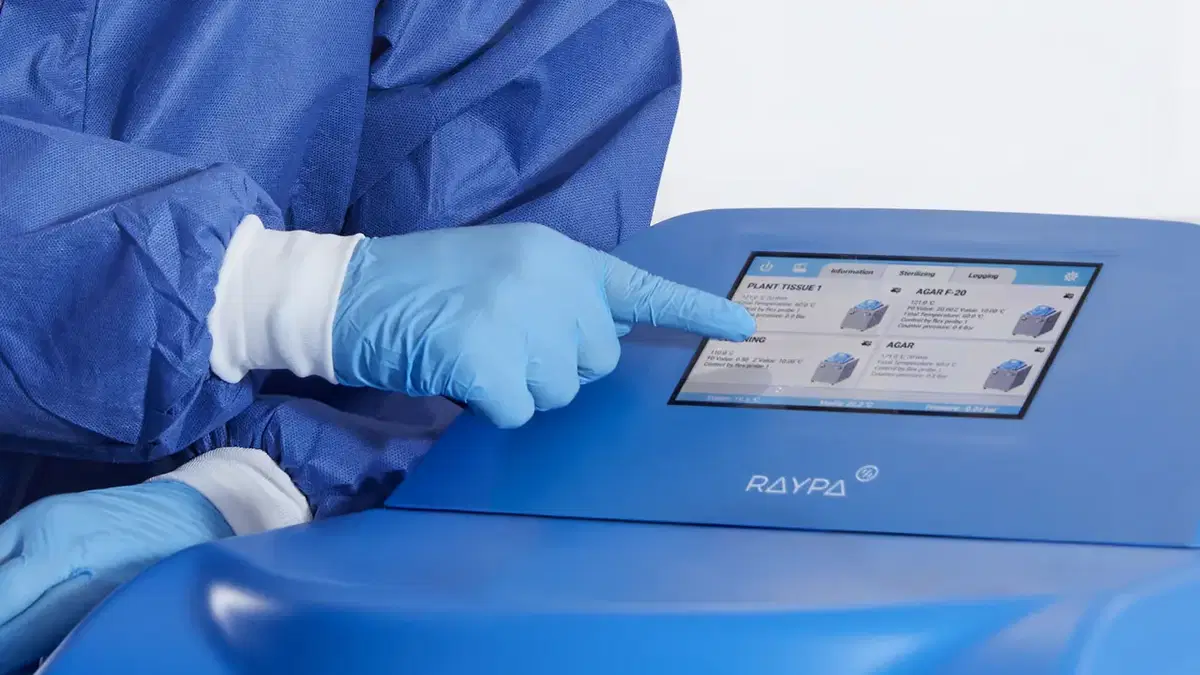
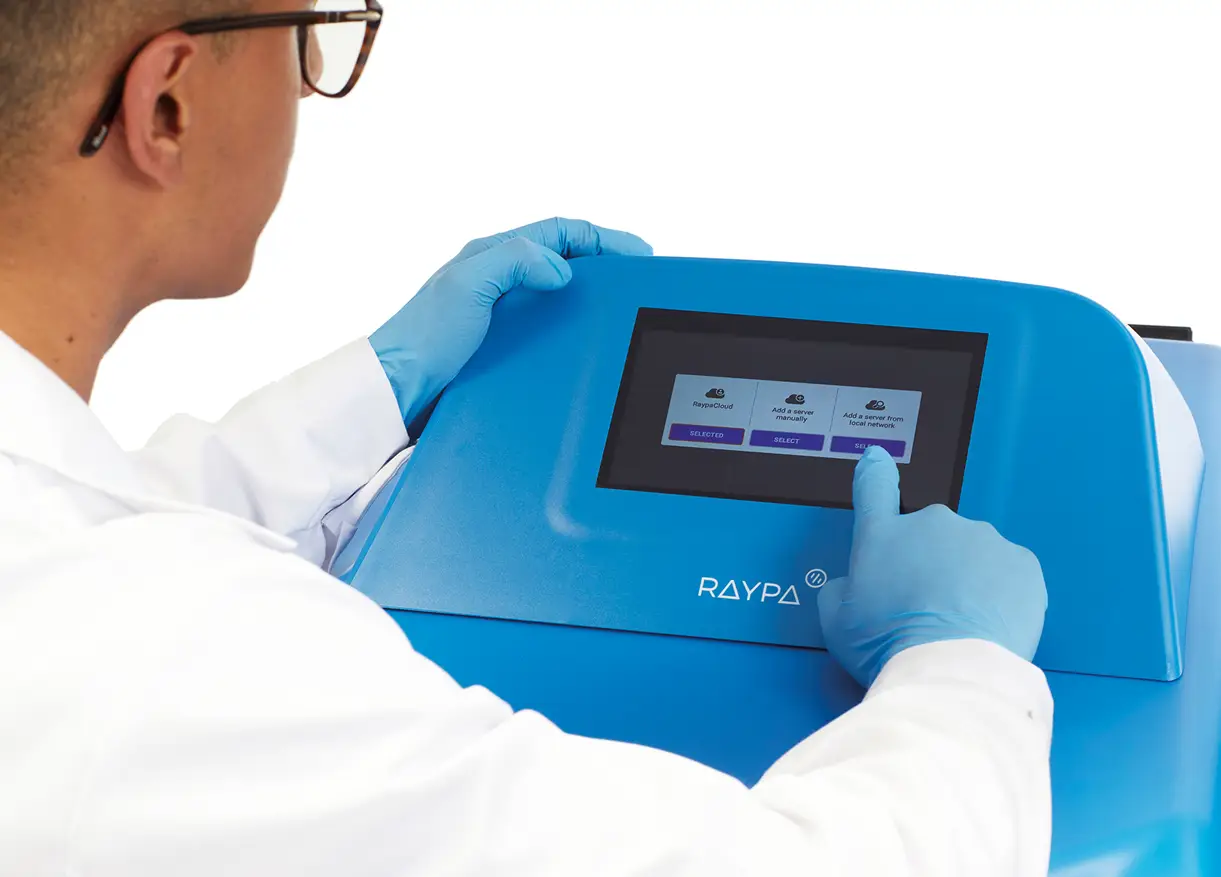
A modern 7” capacitive touchscreen with digital controls, providing intuitive, precise management of all processes.
7” capacitive touchscreen
Exceptional Build Quality and Sustainability
Constructed from high-quality stainless steel (AISI-304 externally and AISI-316L internally), TLV-DUAL autoclaves exhibit exceptional corrosion resistance and longevity with minimal maintenance required.
Their fully electric design eliminates reliance on fossil fuels, optimizing water and energy consumption, thus aligning with sustainable practices.
Comprehensive Traceability and Advanced Digital Management
Effective process management and traceability are critical in today’s highly regulated environments. The TLV-DUAL Series offers:
Batch process control to ensure consistent, documented results.
The RAYPAtrace system, including label printers and barcode scanners for complete traceability.
Optional integration with RAYPAcloud digital platform, meeting FDA and GMP standards for secure, centralized management of sterilization cycles from any location.
Flexibility and Adaptability
Designed for swift, straightforward installation, the TLV-DUAL Series integrates essential functionalities into a compact, user-friendly unit:
Simplified water and electrical connections.
Antistatic casters with integrated brakes for easy mobility.
Optional basket lift system, either integrated (FIX-LIFT) or mobile (MOB-LIFT), ensuring safe handling of heavy loads.
RAYPA’s MOB-LIFT Basket Lift System
Comprehensive Technical Support and Consulting
When you choose a RAYPA autoclave, you benefit from specialized technical support at every stage – from installation and commissioning to predictive and corrective maintenance. Our global network of authorized technicians guarantees prompt, effective service whenever needed.
Ready for More Information or a Customized Quote?
If you’re interested in learning more about the TLV-DUAL Series or need a personalized quote, please contact our sales team.
We’re here to assist you in finding the ideal autoclave for your laboratory.
At RAYPA, we believe that no one can better explain the benefits of incorporating the ENODEST distiller into their oenological analysis laboratory than our customers themselves.
For this reason, we interviewed Ana Isabel Patón del Campo, a laboratory technician at the Viticulture and Enology Station (EVE) in Alcázar de San Juan. She is a professional with extensive experience in research and quality control within the Spanish wine sector.
The Viticulture and Enology Station (EVE) of Alcázar de San Juan is a public laboratory specialized in oenological analysis, part of the Regional Institute for Agro-Food and Forestry Research and Development (IRIAF) in Castilla-La Mancha, Spain. Located in Alcázar de San Juan, it features modern facilities and a highly qualified technical team.
EVE provides advanced services to wineries, cooperatives, and regulatory bodies, continuously adapting to sector needs. Moreover, it actively participates in research and innovation projects, collaborating with universities and wine-related entities to foster the development of the wine industry in Castilla-La Mancha.
Ana Isabel Patón del Campo, a laboratory technician at EVE, specializes in oenological analysis and wine quality control. Her professional career has been entirely dedicated to supporting the regional wine industry.
Ana Isabel actively participates in research, technical projects, and conferences related to viticulture, working closely with wineries, denominations of origin, universities, and technological centers. Her contributions significantly drive innovation, positioning EVE as a reference laboratory for certification and wine quality in Castilla-La Mancha.
To begin with, could you briefly explain the main mission of the Viticulture and Enology Station (EVE)?
The Viticulture and Enology Station (EVE) in Alcázar de San Juan is a public oenological laboratory under the Regional Institute for Agro-Food and Forestry Research and Development (IRIAF), which is affiliated with the Ministry of Agriculture, Livestock, and Rural Development of the Castilla-La Mancha Regional Government (JCCM).
Our primary mission is to ensure the quality and safety of regional wines through rigorous analytical control and certification throughout all production stages, with particular emphasis on export.
We operate a modern and efficient laboratory where we conduct routine and specialized analyses for wineries and producers. Our philosophy is to adapt to industry requirements, developing new methods as necessary to deliver timely solutions.
What type of analyses do you typically perform with ENODEST distillers?
We typically use ENODEST distillers to distill wines and other wine derivatives accurately, determining their alcoholic strength by volume. This analysis is essential for ensuring regulatory compliance, especially for certification and quality control processes required in both domestic and international markets.
What factors influenced your decision to choose RAYPA’s equipment again over other options on the market?
We decided to trust RAYPA distillers primarily due to our previous positive experience with other equipment from this brand. Daily, we need robust, reliable equipment that provides consistent results without complications.
How long have you been using ENODEST equipment in your lab, and how many units do you currently have?
Our laboratory has a long history of serving the wine industry since 1927. Throughout all these years, ENODEST equipment has been our technicians’ preferred choice due to its effectiveness. We have acquired multiple units at different stages, and they have become integral to our daily operations.
Which specific features of the ENODEST distillers are most useful in your daily activities?
The feature we most value in our daily routine is the programmable timer, allowing us to optimize our workflow and ensure timely, precise results for each analysis. Additionally, the ability to visually monitor the process is another significant operational advantage.
How has the lab staff’s experience been regarding the use and programming of oenological distillers?
Our experience has been very positive. These units are intuitive from day one: the interface is clear, and their operation is straightforward. This significantly simplifies daily tasks, allowing us to focus on obtaining reliable results effortlessly.
Regarding technical support and maintenance, how has raypa’s response been?
We have rarely needed technical support. However, on the few occasions it has been necessary, RAYPA’s response has been swift and effective.
Would you recommend RAYPA’s ENODEST equipment to other laboratories or companies in the industry? Why?
Yes, they are user-friendly, high-quality equipment. For a laboratory like ours, which handles high sample volumes and requires consistent results, ENODEST distillers have proven to be a reliable tool.
Thank you very much for sharing your experience with us!
The ENODEST oenological distiller is the perfect equipment for oenological analysis laboratories, wine and champagne cellars, liquor factories, breweries, and ethanol production plants.
It enables precise determination of alcoholic strength by volume in wines, musts, beers, liquors, and high-alcohol beverages, in compliance with OIV, EEC 2676/90, and EC 2870/2000 regulations. Additionally, it assesses volatile acidity and sorbic acid levels.
With a successful track record spanning over 30 years in research and development, this latest generation oenological distiller is built to withstand the test of time. Constructed from premium quality materials, its stainless steel exterior guarantees prolonged durability.
If you’ve ever found residue after what should have been a “proper” autoclave cycle, you already know that pre-cleaning isn’t just a prep step – it’s the foundation of the entire process.
In this article, we get straight to the point: what to do, how to do it, and why it matters.
Why Is Pre-Cleaning So Essential?
Autoclaves use saturated steam under high pressure, but that steam can’t penetrate dried debris, grease, blood, or poorly rinsed detergents.
Think of it like trying to disinfect through a layer of mud – it simply doesn’t work. If the instruments aren’t clean, they won’t be sterile.
The goal of pre-cleaning is to remove:
Organic matter (blood, tissues, bodily fluids)
Inorganic residues (salts, oxides)
Chemical residues (detergents, lubricants)
Biofilms and invisible contaminants
The objective is simple: clean, smooth surfaces free of anything that could interfere with the autoclave’s sterilization cycle.
Key Stages for Effective Cleaning
1. Clean Right After Use
Don’t let contaminants dry. Ideally, remove the bulk of debris at the point of use with a clean, damp cloth. If there’s going to be a delay before cleaning, apply an enzymatic gel or foam to keep organic material moist. This saves both time and wear on your equipment.
⚠️ Important: Never soak instruments in saline. Sodium chloride accelerates corrosion, especially on stainless steel.
2. Safe Transport
Use a sealed, clearly labeled tray to avoid spills, injuries, or cross-contamination. And yes, personal protective equipment (PPE) is non-negotiable: thick gloves, protective eyewear, and a fluid-resistant lab coat.
3. Manual or Mechanical Cleaning
Manual (when necessary or for delicate items)
Use soft-bristled brushes (never metal).
Apply enzymatic detergent and scrub all surfaces, especially hinges and crevices.
Disassemble items if their design allows.
Rinse with distilled or demineralized water. Avoid tap water whenever possible.
Mechanical (washer-disinfector or ultrasonic cleaner)
Load without overcrowding to ensure all surfaces are reached.
Follow the manufacturer’s recommended cycles.
Regularly check filters, spray nozzles, and water temperature.
4. Inspection: Look Closely
Before you even think about sterilization, inspect the instruments thoroughly. Use bright white light or magnification if needed. Check hidden areas, threads, and lumens. If you spot any residue, clean again. There are no shortcuts here.
5. Complete Drying
Instruments must be completely dry before going into the autoclave. Why? Residual moisture can create air pockets or film that blocks steam penetration. Trapped water also promotes corrosion, especially in joints and hinges.
Avoid wiping with cloths that leave lint. Use filtered compressed air or drying cabinets. And if you’re applying surgical lubricant, make sure everything is bone dry – moisture can dilute the lubricant or carry it where it doesn’t belong.
Recommended Products That Work
Enzymatic detergents: Effective, safe, and non-corrosive
Nylon brushes: Use different sizes depending on the instrument
Surgical lubricants: Water-based and silicone-free
Humectant gels: Keep residues moist until cleaning
Cleaning indicators: Test strips for detecting protein or residue
Common Mistakes We See Often
Leaving instruments dirty for hours
Using inappropriate products (bleach, saline, or unneutralized disinfectants)
Not disassembling complex instruments
Skipping the rinse or using tap water
Assuming “looks clean” means “is clean”
Risks of Inadequate Cleaning
Poor cleaning doesn’t just block sterilization. It also promotes premature corrosion, leaves permanent stains and puts users at risk. Can invalidate entire production batches in pharmaceutical settings.
Cleaning Tips by Material Type
Stainless steel: Always dry thoroughly. Avoid prolonged exposure to salts or chlorides.
Laboratory glassware: Use soft brushes only. Rinse well with demineralized water to prevent spots or chemical interference.
Plastics: Ensure they’re autoclavable. Use compatible detergents, as some plastics can warp or degrade.
Silicone or rubber stoppers: Wash with mild detergent, rinse well with demineralized water, and dry thoroughly. Avoid harsh products and confirm autoclave compatibility.
Other materials: Always check the manufacturer’s guidance for cleaning procedures and sterilization compatibility.
Smart Practices That Make a Difference
Train your staff well – cleaning is a skilled task, not a side job
Establish clear, visible, and up-to-date protocols
Conduct spot checks: inspections, residue tests
Keep records of what was cleaned, how, and when
If you’re serious about sterilization, start with serious cleaning. The autoclave does its job, but it’s not magic.
Clean surfaces are the minimum requirement for effective steam sterilization. Doing it right doesn’t take much more time – but it saves you from big problems later.
Still have questions about how to clean instruments before autoclaving with your RAYPA autoclave? Contact us. We’re happy to help.
Guideline for Disinfection and Sterilization in Healthcare Facilities – CDC (EE.UU.) – Centers for Disease Control and Prevention. Source: CDC – Sterilizing Practices
Recomendaciones para la desinfección y esterilización de los materiales sanitarios – AEMPS (España) – Agencia Española de Medicamentos y Productos Sanitarios (Plan Nacional de Resistencia a Antibióticos). Source: Technical document – PRAN/AEMPS, 2017
In sterilization processes, simply reaching the correct temperature inside the autoclave chamber is not enough. What truly matters is whether that temperature is also achieved within the load itself – especially when sterilizing liquids.
Direct monitoring inside the product ensures that all material has been properly sterilized, minimizing microbiological risks. Additionally, this measurement is key to calculating the F₀ value and optimizing cycles by reducing time without compromising the effectiveness of the process.
For this reason, PT-100 flexible probes have become an essential accessory in laboratories and facilities that demand precision, traceability, and validation in their sterilization processes.
What Are PT-100 Probes and How Do They Work?
PT-100 probes are temperature sensors based on the electrical resistance of platinum. The name indicates a resistance of 100 ohms at 0 °C. As the temperature changes, so does the resistance, enabling accurate readings even in demanding environments.
These probes are inserted directly into the load – for example, into a flask containing culture media – so they provide the actual temperature of the product, not just the surrounding environment. This distinction is particularly relevant in liquid loads, where heat penetrates more slowly.
Additionally, the use of PT-100 probes allows cycle control through the F₀ parameter (in compatible models), which represents the accumulated lethality of the process based on the time the sample remains at a specific temperature, using 121.1 °C as a reference.
Why Is It Crucial to Measure Inside the Product?
The temperature inside the sterilization chamber does not guarantee that the core of the sample has reached sterilization temperature. In liquids, there can be a significant thermal delay: steam may reach 121 °C while the liquid is still below 100 °C.
This lag can lead to false positives if the sterilization time is counted too early.
Measuring directly inside the product allows you to:
✅ Ensure the entire sample has been properly treated.
✅ Avoid microbiological risks.
✅ Validate and optimize cycles using the F₀ value.
PT-100 Probe Models Available from RAYPA
The flexible PT-100 probes offered by RAYPA are designed to ensure precise control of the sterilization process, especially when monitoring liquid loads. For optimal functionality and proper integration with the autoclave control system, these probes must be installed at the factory.
Flexible Probe for Classic Line Autoclaves
References: PT-2, PT-2-B, PT-2-AH and PT-2-B-AH
These probes are specifically designed to monitor the sterilization of liquid loads in autoclaves from RAYPA’s Classic line.
They are available in several versions, compatible with the AES, AE-DRY, AE-B, AHS-N, AHS-DRY, and AHS-B series, with probe lengths varying according to the specific autoclave model (60 mm for benchtop models, 120 mm for vertical models).
Main Benefits:
Effective sterilization of liquids: The probe accurately measures temperature at the center of the liquid sample, ensuring that the required temperature is reached within the load. This significantly improves the reliability of the sterilization process.
Prevention of boilover effects: Continuous monitoring of liquid temperature minimizes the risk of overheating and spills when opening the autoclave. This protects both the operator and other contents of the autoclave chamber.
Optimization of sterilization processes: By simultaneously controlling the temperature in the chamber and inside the liquid, it provides more precise tracking of the F₀ value and cycle lethality. This facilitates more efficient sterilization, ensuring consistent results, regardless of the number or size of the processed containers.
Flexible Probe for Top Line Autoclaves
Reference: PT-2-TLV
Specifically recommended for accurate monitoring of liquid sterilization processes in RAYPA’s Top line autoclaves.
Compatible with RAYPA’s TLV-DUAL, TLV-PD, TLV-FA, and TLV-S autoclave models, all intended for critical applications requiring rigorous control. These units allow installation of up to two probes, enhancing versatility for monitoring. Some series, such as TLV-DUAL and TLV-FA, include one flexible probe as standard equipment.
Unlike the Classic line probes, the probe length varies depending on autoclave capacity and the specific needs of each sterilization process. This provides greater versatility, facilitating placement in various types of containers or different positions within the chamber.
Modes of use:
Single flexible probe: Allows direct monitoring of the internal temperature of the liquid sample, initiating the sterilization phase only once the desired temperature is reached. Additionally, installation of this probe enables programming cycles based on the F₀ value, optimizing lethality control and offering greater process flexibility.
Two flexible probes: Ideal for comparing conditions between different samples, especially when containers of varying sizes or positions within the chamber are used (such as upper and lower levels). The sterilization cycle starts only when both probes detect the required temperature, ensuring uniform treatment throughout the entire load.
Practical Recommendations for End Users
Choosing the right accessory to monitor temperature in an autoclave depends on the autoclave model, type of load, regulatory requirements, and process objectives.
👉 For liquids and culture media, a flexible PT-100 probe is always recommended.
👉 For heterogeneous loads, using two probes (in Top line models) helps identify cold spots and validate process uniformity.
👉 In laboratories subject to regulations such as GMP, FDA, or ISO 13485, it is essential to work with systems that enable F₀-based control, traceability, and report generation.
Common Errors When Using Probes in Autoclaves
Even with the appropriate probes, improper use can compromise the effectiveness of the sterilization process. Avoid the following mistakes:
🚫 Placing the probe in contact with the container wall (this distorts the measurement).
🚫 Using probes with damaged or uncalibrated cables.
🚫 Starting the cycle without confirming correct placement inside the sample.
🚫 Failing to verify probe compatibility with the autoclave model.
Expert tip
Always consult with the manufacturer or RAYPA’s technical support team to ensure you select accessories that are compatible with your specific model and application needs.
Do you have questions about which probe is best suited to your application? Our team of professionals is available to guide you and help you achieve safe, validated, and efficient sterilization.
In the field of sterilization, choosing the right autoclave is essential to ensure efficiency and safety in the process.
Two of the most common options are vertical autoclaves and benchtop horizontal autoclaves, each with specific features that make them ideal for different applications.
In this article, we will explore their differences, advantages, and recommended uses in detail.
What Is the Difference Between a Vertical and a Horizontal Autoclave?
The main difference between a vertical autoclave and a horizontal autoclave lies in the loading orientation and the sterilization chamber design:
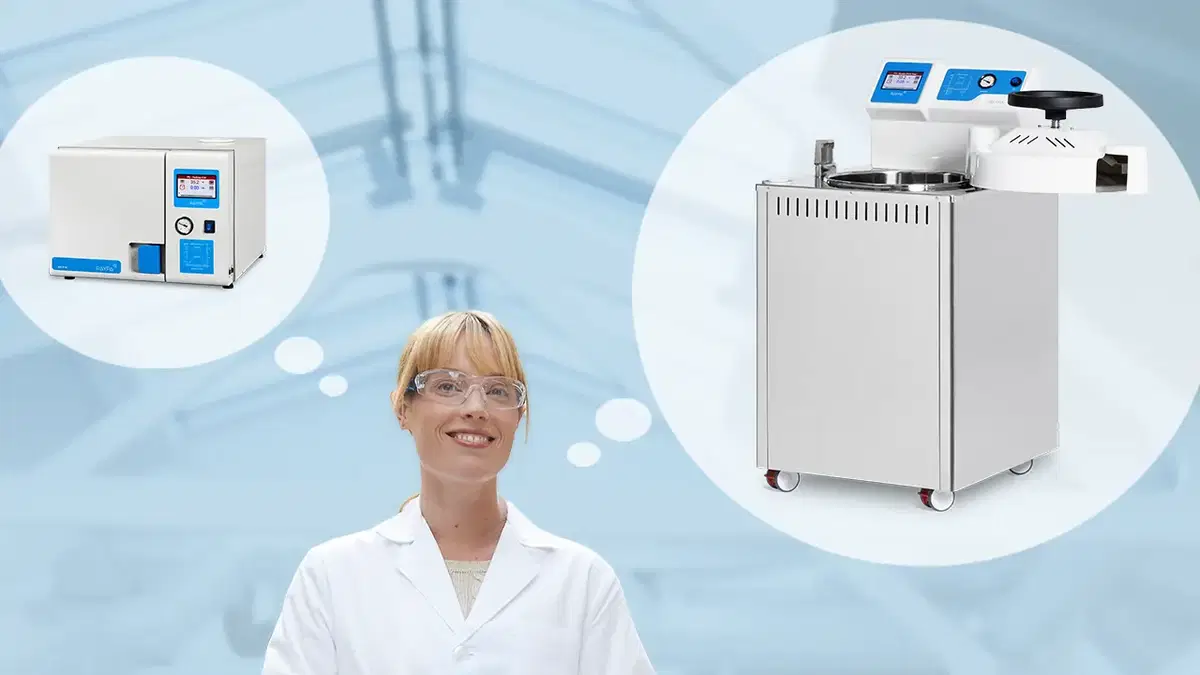
Vertical autoclaves: The load is inserted from the top. They are known for their large capacity, allowing for the sterilization of higher volumes of material in a single cycle.
Benchtop horizontal autoclaves: The load is placed from the front through a swing door. These autoclaves are compact and designed for space-constrained environments, making them ideal for smaller laboratories and clinical settings.
Dimensions and Space Requirements
Vertical autoclaves require more vertical space but optimize floor usage in laboratories and workspaces. In contrast, benchtop autoclaves are more compact, take up less height, and can be placed on tables or lab benches, making them ideal for small work areas.
Capacity and Recommended Uses
Vertical autoclaves: Designed for high-volume sterilization, they allow large quantities of materials to be processed in a single cycle. They are commonly used in laboratories, hospitals, and research facilities where efficiency is essential.
Benchtop autoclaves: Built for smaller loads and fast sterilization cycles, they are widely used in clinics, medical offices, and small labs where a compact solution is needed.
Pros and Cons of Vertical Autoclaves
Advantages of Vertical Autoclaves:
👍 Larger capacity: Ideal for sterilizing instruments, culture media, and bulky lab materials efficiently.
👍 Space optimization: While taller, they take up less floor space, maximizing lab layout efficiency.
👍 Versatile sterilization: Suitable for various materials, including liquids and large equipment.
Disadvantages of Vertical Autoclaves:
👎 Less ergonomic loading: Top-loading requires lifting materials, which can be challenging for heavy loads. However, lifting aids like fixed or mobile hoists improve safety and ease of use. 👎 Longer handling time: Loading and unloading may take longer compared to benchtop models, depending on the material type.
Pros and Cons of Benchtop Horizontal Autoclaves
Advantages of Benchtop Autoclaves:
✅ Compact design: Ideal for space-constrained environments, as they can be placed on tables, workbenches, or lab counters. ✅ Ergonomic loading: The front-loading system allows materials to be placed individually on the tray or directly inside the autoclave, reducing the need to lift heavy loads. Additionally, a transport trolley can be used to bring the load closer to the autoclave opening for easier and safer handling. ✅ Fast sterilization cycles: Designed for efficient processing of moderate volumes, making them ideal for clinics and small laboratories.
Disadvantages of Benchtop Autoclaves:
❌ Limited capacity: The cylindrical chamber design restricts space utilization, preventing full use of the corners and limiting the height of certain containers placed at the sides of the trays. ❌ Less versatile: Less efficient for large or bulky equipment or high volumes of liquid sterilization compared to vertical autoclaves.
How to Choose the Right Autoclave
Choosing between a vertical autoclave and a benchtop horizontal autoclave depends on several key factors:
Load volume: If you need to sterilize large quantities of material in a single cycle, a vertical autoclave is the best option.
Available space: For environments with limited space, a benchtop autoclave may be the most suitable alternative.
Application type: Laboratories handling bulky materials or large volumes of liquids will benefit from the higher efficiency of vertical autoclaves.
Autoclave Vertical vs Horizontal: Which One Should You Choose?
When comparing an autoclave vertical vs horizontal, the decision ultimately depends on your sterilization needs. If you prioritize capacity and efficiency, a vertical autoclave is the better choice. However, if you require a compact, front-loading system, a benchtop horizontal autoclave will be more practical.
In a nutshell
Both types of autoclaves provide effective sterilization solutions, but the right choice depends on your specific needs.
If you require a high-capacity solution for large sterilization loads, a vertical autoclave is the ideal option.
On the other hand, if you need a compact and efficient unit for moderate loads, a benchtop horizontal autoclave is the best alternative.
Still unsure which autoclave to choose? At RAYPA, we help you find the best sterilization solution for your laboratory. Contact us today for expert advice.
Qualification is an essential process to ensure that equipment meets the required standards in terms of safety, performance, and regulatory compliance.
In the case of autoclaves, qualification is crucial to verify their proper operation in sterilization processes, ensuring that the equipment functions reliably under established regulations.
This process is particularly critical in industries such as pharmaceuticals and biotechnology, where sterilization must meet strict regulatory requirements to guarantee product safety and end-user protection.
Phases of the Autoclave Qualification Process
The qualification of an autoclave consists of three main phases, each designed to ensure the safe and efficient operation of the equipment:
1. Installation Qualification (IQ)
The first phase of the validation process verifies that the autoclave has been installed correctly according to the manufacturer’s specifications. This initial step includes:
Inspection of components and connections.
Verification of technical documentation.
Validation of Standard Operating Procedures (SOPs) for maintenance, calibration, and cleaning.
2. Operational Qualification (OQ)
During this phase, tests are conducted to ensure that the autoclave consistently operates within predefined parameters. This involves:
Functional tests under different conditions.
Evaluation of sterilization cycles.
Identification and correction of any deviations before actual operation.
3. Performance Qualification (PQ)
The final phase of the qualification process confirms that the autoclave maintains reliable performance under real production conditions through:
Sterilization tests using standard materials and processes.
Documentation of results and implementation of corrective measures if necessary.
Available Qualification Options
Top Line autoclaves offer the possibility of qualifying both their functional performance and the management of electronic records within their software.
Autoclave Qualification
To ensure optimal performance and maximum safety, the autoclave must comply with the latest standards and regulatory requirements.
ISO 17665 establishes the requirements for the safe and effective sterilization of healthcare products using moist heat processes.
Compliance with this standard ensures the effectiveness of sterilization cycles, preserves product integrity, and guarantees end-user safety.
Software Qualification
Software qualification is essential for customers who must comply with FDA Title 21 CFR Part 11 and/or Annex 11 of the Good Manufacturing Practices (GMP) of the European Union. These regulations set requirements for the storage of electronic records, digital signatures, and the management of computerized systems.
In this context, the available qualification options include:
Controller Software Qualification: Validates that the autoclave microprocessor manages information in compliance with FDA Title 21 CFR Part 11.
Management Platform Software Qualification: Verifies that the external RAYPAcloud platform, installed on a private server, meets the requirements of FDA Title 21 CFR Part 11.
Complying with these regulations ensures data integrity, security, and reliability, preventing risks that could compromise product quality or safety.
Additionally, it is crucial for passing audits and obtaining regulatory certifications, supporting traceability and transparency throughout the software lifecycle.
Qualification Service Options for RAYPA Autoclaves
At RAYPA, we offer two qualification service options to adapt to the specific needs of each customer:
1. Comprehensive Qualification by RAYPA
Our team of specialized technicians or authorized entities manages the entire process, ensuring compliance with the highest standards. This service may include:
Commissioning of the equipment.
Complete qualification of the autoclave and its software.
Detailed documentation for audits and certifications.
2. Third-Party Qualification
For customers who prefer to work with their trusted agency, we provide:
Comprehensive technical documentation and detailed protocols.
Technical support for inquiries throughout the process.
Both options ensure that autoclaves comply with regulatory requirements and operate with maximum efficiency and safety.
Whether you choose our comprehensive qualification, where we handle the entire process, or our third-party qualification service, we always provide the necessary documentation and support.
Choose the option that best suits your needs and ensure reliable, certified sterilization. For more information about our autoclave qualification services, contact us.
The efficiency and operational safety of an autoclave—an essential piece of equipment for sterilizing medical instruments, laboratory tools, and other critical environments—are intrinsically linked to the rigorous implementation of proper care and cleaning practices.
The accumulation of residues can not only negatively affect the performance of the equipment but also pose a significant risk to operator safety and the integrity of the sterilization process.
This article aims to provide a comprehensive guide on cleaning and maintaining autoclaves, covering general considerations as well as specific recommendations to ensure the durability, reliability, and effectiveness of these devices.
Always refer to the manufacturer’s manual
The first step should always be consulting the specific user and maintenance manuals for the equipment in question. These documents provide detailed information on routine care practices, appropriate consumables, and technical installation specifications.
Additionally, following these guidelines helps maintain the validity of the equipment’s warranty and ensures that all procedures align with industry standards and regulations.
What products are needed to clean an autoclave?
To prevent damage to the equipment and ensure optimal performance, it is essential to use specialized cleaning products that do not compromise the integrity of its components.
Avoid using materials or substances that may be abrasive or corrosive to the autoclave.
Some recommended products for cleaning an autoclave include:
Soft cloths or cotton towels.
Distilled water to prevent mineral buildup that could clog the drainage valve.
Neutral detergent or a non-abrasive cleaning product recommended by the manufacturer.
Protective gloves for the user.
What does autoclave cleaning involve?
Routine cleaning consists of a series of simple manual operations that must be performed carefully to avoid damaging the equipment. It is important to follow general precautions such as:
Avoiding direct water jets, whether high-pressure or spray.
Preventing the accumulation of limescale or other residues in the sterilization chamber, lid, and gasket.
Recommended cleaning procedures:
1. Cleaning the gasket, interior of the lid, and external surfaces. To remove limescale deposits from the gasket and the lid’s interior, use a clean cotton cloth dampened with water. For external surfaces, use a soft cloth dampened with water, and if necessary, add a small amount of neutral detergent.
In both cases, it is crucial to thoroughly dry all surfaces and remove any remaining residue before using the autoclave. Occasionally, external surfaces can also be disinfected with denatured alcohol.
2. Cleaning the sterilization chamber and accessories. To clean the sterilization chamber, heating element cover, baskets, and internal surfaces, use a clean cotton cloth dampened with water, adding a small amount of neutral detergent if needed. Once finished, carefully rinse all surfaces with distilled water to remove any residue.
Avoid using sharp or pointed objects to remove scale buildup. If significant limescale deposits are observed, check the quality of the water being used.
3. Cleaning the water reservoirs. In autoclaves equipped with clean and waste water tanks, these should be emptied and cleaned regularly. It is essential not to empty the tank while the equipment is under pressure, as the steam and hot water could cause burns.
4. Cleaning the drainage filter. With regular use, various types of residues may accumulate in the drainage filter, potentially clogging the system. In such cases, the filter should be removed according to the manufacturer’s instructions and carefully cleaned under running water.
For stubborn residues or to remove larger debris, a pointed instrument may be required. If the filter is clogged with agar, we recommend using hot water. If, after cleaning, the filter remains obstructed or does not show improvement, it should be replaced with an original spare part.
How often should an autoclave be cleaned?
The cleaning and maintenance schedule of an autoclave should be adjusted based on workload intensity and the type of sterilization processes performed.
In general, we recommend the following routine maintenance schedule for your autoclave:
Daily: Clean the gasket, interior of the lid, and external surfaces.
Weekly: Clean the sterilization chamber and accessories. Additionally, replace the water in the tanks for models that require it.
Monthly: Clean the drainage filter.
Maintenance tips after cleaning an autoclave
Regular inspections are essential to proactively identify and address any signs of wear, residue buildup, or equipment malfunctions.
Adopting systematic cleaning practices, along with timely replacement of worn components and precise calibration of the equipment’s controls and sensors, are key aspects of an effective and efficient maintenance program.
The rigorous implementation of these maintenance actions—performed with the necessary frequency and attention—helps extend the equipment’s lifespan, enhances its performance, and ensures safe and effective sterilization processes that comply with the highest quality and safety standards.
At RAYPA, we recommend conducting a comprehensive annual inspection, focusing on verifying the optimal operation of safety mechanisms, assessing the condition of the door gasket, replacing the bacteriological filter, and performing a meticulous calibration of the temperature probes.
If you have any questions regarding the cleaning or maintenance of your autoclave, do not hesitate to contact us. Our experts are ready to assist you with troubleshooting, training, and supplying high-quality original spare parts.
Sterilization is a fundamental process in various industries, particularly in the medical, dental, and pharmaceutical fields. Proper elimination of pathogenic microorganisms is essential to prevent infections and ensure that instruments and materials that come into contact with the human body or sensitive products remain contamination-free.
Among sterilization tools, autoclaves play a vital role as they use high-pressure steam to effectively disinfect a wide range of materials. However, not all autoclaves are the same.
There are different autoclave classes, such as Class N, Class S, and Class B, each designed to meet specific requirements and cater to diverse needs. Choosing the right type of autoclave depends on several factors, including the type of load, frequency of use, and the level of sterilization required.
In this article, we will delve into the characteristics and applications of each autoclave class, helping you identify the best option for your needs.
Autoclave Classes: Main Types and Characteristics
Autoclaves are classified based on their sterilization technology and the types of materials they can process.
The three main categories—Class N, Class S, and Class B—are designed to meet different sterilization requirements, making them suitable for various settings and load types.
Class N Autoclaves: These are designed for sterilizing solid, non-porous materials. They use a gravity displacement process without a vacuum pump, limiting their use to non-porous loads and materials without cavities. This type of autoclave is commonly found in small clinics or laboratories handling simple materials.
Class S Autoclaves: Positioned as an intermediate option, these autoclaves are suitable for some loads with cavities or porous materials, though they have limitations compared to Class B autoclaves. They offer good adaptability to specific needs and are often used in environments requiring versatility but without the rigorous sterilization standards of hospitals.
Class B Autoclaves: These are the most advanced and versatile, capable of sterilizing a wide range of materials, including those with cavities, packaging, and porous loads. They incorporate a pre-vacuum system that ensures the complete removal of air before steam injection, guaranteeing effective sterilization. Class B autoclaves are the ideal choice for clinics, hospitals, and laboratories that demand high sterilization standards.
Each autoclave class is designed with specific strengths and limitations, making them suitable for different practical applications.
The following sections provide an in-depth overview of each class, helping you determine the most appropriate choice for your requirements.
Class N Autoclaves
Class N autoclaves are specifically designed for basic sterilization tasks and straightforward material requirements.
These units utilize a gravity air displacement system, which removes air from the chamber without the need for a vacuum pump.
This approach is ideal for sterilizing solid, non-porous items, including simple metal instruments and unpackaged materials with no internal cavities.
Key Features of Class N Autoclaves
Gravity Air Displacement: Class N autoclaves expel air from the chamber through the introduction of steam, without relying on a vacuum system to remove air completely. This limits their effectiveness for porous materials or items with cavities, as trapped air can hinder full steam penetration. This limits their effectiveness for porous materials or items with cavities, as trapped air can hinder full steam penetration.
Recommended Applications: These autoclaves are ideal for sterilizing solid, non-porous instruments, such as stainless steel tools, trays, and containers that do not require complex packaging or contain internal cavities.
Limitations of Class N Autoclaves
Class N autoclaves are not suitable for sterilizing items with deep cavities, porous materials, or packaged instruments.
This limitation arises because gravity displacement does not ensure complete steam penetration in complex surfaces. As a result, Class N autoclaves are primarily used in small clinics or laboratories that do not require the sterilization of highly intricate materials.
While Class N autoclaves are restricted in their ability to sterilize complex instruments, Class B autoclaves excel in this area, as demonstrated by various clinical studies.
Class S Autoclaves
Class S autoclaves represent an intermediate category in terms of sterilization capacity and versatility. While they are more advanced than Class N models, they do not reach the level of specialization offered by Class B autoclaves. Their design allows them to handle certain porous materials and loads with cavities, though not all.
These autoclaves typically combine gravity air displacement methods with limited vacuum systems, offering greater operational flexibility compared to Class N models.
Key Features of Class S Autoclaves
Air Displacement with Limited Vacuum Options: Some Class S models include a partial vacuum system, which enhances air removal for certain loads and allows for the sterilization of materials with simple cavities or basic packaging.
Versatile Applications: Class S autoclaves can be used to sterilize non-porous loads, instruments with simple cavities, and, in some cases, porous and packaged materials. This flexibility makes them ideal for facilities that require a range of sterilization options without the stringent demands of a hospital setting.
Limitations of Class S Autoclaves
While Class S autoclaves offer greater versatility than Class N models, they do not provide the same level of effectiveness for complex materials as Class B autoclaves.
This means they may not be the best choice for densely packaged materials or instruments with deep, intricate cavities. Their performance depends largely on the specific load type and the autoclave model.
Class S autoclaves are an intermediate solution, making them ideal for clinics or laboratories needing more flexibility than Class N models provide, but without the highest sterilization standards offered by Class B autoclaves.
Class B Autoclaves
Class B autoclaves are the most advanced and versatile sterilization systems available.
Designed to meet the highest hygiene standards, these autoclaves can sterilize a wide range of materials, including those that pose particular challenges, such as porous items, instruments with deep cavities, and packaged objects.
They feature a pre-vacuum system that ensures complete air removal from the chamber, enabling uniform and efficient steam penetration throughout the entire load.
Key Features of Class B Autoclaves
Pre-Vacuum System: This system ensures the complete evacuation of air before steam is introduced, eliminating potential air pockets that could compromise the sterilization process. It allows for effective treatment of complex materials, ensuring uniform sterilization even in the most challenging areas.
Material Versatility: Class B autoclaves are capable of sterilizing a wide variety of loads, including porous materials, instruments with long and narrow cavities, and packaged items. Their versatility makes them essential in medical and hospital settings where a diverse range of instruments and the highest sterilization standards are required.
Typical Applications of Class B Autoclaves
Due to their ability to handle complex loads, Class B autoclaves are widely used in hospitals, clinics, and laboratories that demand professional-grade sterilization.
They are ideal for sterilizing everything from surgical and dental instruments to textiles and packaged materials, ensuring the safety of each processed item.
In conclusion, Class B autoclaves are the best choice for those seeking a comprehensive and reliable sterilization solution for a wide variety of materials.
Although they are more expensive than Class N or S autoclaves, their ability to meet the most stringent sterilization requirements justifies the investment in high-level healthcare environments.
Which Autoclave Class Should You Choose?
Choosing the right autoclave depends largely on the types of materials you need to sterilize and the specific requirements of your work environment.
Here are some key factors to consider when deciding between a Class N, Class S, or Class B autoclave:
Type of Load and Material: Class N autoclaves are ideal for solid, non-porous instruments, such as tools without cavities. If you occasionally need to sterilize instruments with cavities or porous materials, Class S autoclaves provide a suitable intermediate option. For complete sterilization of porous materials, packaged instruments, or those with complex cavities, Class B autoclaves are the best choice.
Required Sterilization Level: If your environment demands high sterilization standards, such as in hospitals or specialized clinics, Class B autoclaves are essential. Conversely, small clinics or laboratories handling straightforward materials may find a Class N autoclave sufficient.
Frequency and Versatility of Use: Class S and Class B autoclaves offer greater versatility and can handle a broader range of loads, making them ideal for settings with varied sterilization needs. Class N autoclaves, on the other hand, are better suited for specific tasks and have more limited sterilization capabilities.
Advantages and Limitations of Each Autoclave Class
Class N: A cost-effective option for basic applications but limited in the types of materials it can sterilize.
Class S: Strikes a balance between capacity and cost, making it suitable for clinics with specific sterilization needs that do not require the highest standards.
Class B: The most comprehensive choice, capable of sterilizing all types of materials and ensuring maximum efficiency in demanding environments.
Ultimately, selecting the right autoclave requires a clear understanding of the materials, environmental requirements, and budget constraints.
Each autoclave class has a specific role in the market, and understanding their features is essential for ensuring effective and safe sterilization across various applications.
Our range of medical autoclaves is certified under ISO 13485:2016 for medical devices and is designed for use in hospitals, clinics and healthcare centers. These units are available for purchase in many countries, excluding those in the European Union.
If you have any questions, do not hesitate to reach out to our experts. Working together, we can identify and provide a solution that ensures both efficiency and safety in all your sterilization operations.
The autoclave spore test is a crucial procedure for ensuring rigorous sterilization control in both healthcare and research settings, including hospitals, tattoo studios, clinical analysis centers, and the microbiology industry, among others.
This method is considered the gold standard for assessing whether a sterilization process successfully eliminates all microorganisms, including the most resistant ones, such as bacterial spores.
In this article, you will learn how to perform the autoclave spore test, understand the importance of spore control, and explore key regulations to maintain high levels of safety and quality.
What is the Spore Test?
The spore test is a biological indicator used to evaluate the effectiveness of a sterilization process.
Unlike chemical or physical indicators, the spore test uses highly resistant bacterial spores, such as those of Geobacillus stearothermophilus, which are subjected to high-pressure steam sterilization cycles.
If the cycle is effective, the spores are destroyed, indicating a successful sterilization process. Conversely, if the spores survive, it reveals a sterilization failure, posing a significant risk to patient and user safety.
Why is the Autoclave Spore Test Important?
Spore testing in autoclaves is crucial because it provides the most accurate verification of whether equipment has achieved complete sterilization.
Other methods, such as chemical indicators, only confirm if the appropriate parameters for time, temperature, and pressure have been met but do not verify whether the most resistant bacteria have been eliminated.
Routine use of this test is mandatory in many clinical and aesthetic environments. International regulations, such as those from the Centers for Disease Control and Prevention (CDC) and European guidelines, recommend regular spore testing, particularly for critical cycles involving surgical instruments or implants.
How to Perform the Autoclave Spore Test
Performing the autoclave spore test is relatively straightforward but requires strict adherence to a protocol to ensure its effectiveness. Below are the key steps:
1. Preparation of the Biological Indicator
Biological indicators are small vials, strips, or ampoules containing a controlled amount of resistant bacterial spores. These spores are suspended in a medium that promotes their growth if they survive the sterilization process.
The first step is to place the vial, strip, or ampoule inside a bag representative of the materials to be sterilized.
2. Placement in the Autoclave
The vial or strip containing spores should be placed in the least accessible areas of the autoclave, such as the corners of the sterilization chamber or near the drain, especially in gravity displacement autoclaves.
In fractionated vacuum autoclaves, steam distribution tends to be more uniform, but it is still essential to position the biological indicators in these critical areas. These locations are more likely to be cold spots or have reduced steam penetration, making them crucial for verifying the effectiveness of the cycle.
3. Execution of the Sterilization Cycle
Once the biological indicators are positioned, a standard sterilization cycle is run.
It is important to follow the autoclave manufacturer’s instructions, ensuring the correct temperature, time, and pressure parameters for each cycle type.
4. Incubation of the Biological Indicator
After the cycle is complete, the vial is removed and placed in an incubator at a temperature between 55 and 60°C for 24 to 48 hours, depending on the type of incubator (some rapid incubators can provide results in just a few hours).
During this process, the survival and growth of the spores are monitored, typically indicated by a color change in the growth medium.
5. Interpretation of Results
Results are assessed visually or with a rapid incubator that analyzes the vial’s colorimetry.
A yellow color indicates that the spores survived, meaning the sterilization cycle failed.
If the color remains purple or there is no growth, it confirms that sterilization was successful.
How Often Should the Autoclave Spore Test Be Performed?
International regulations recommend conducting autoclave spore testing weekly, particularly for loads containing critical materials such as surgical implants.
It is also advised to perform the test during the first sterilization cycle of each day or whenever there is suspicion that the autoclave may not be functioning correctly.
In some healthcare sectors, regulations mandate more frequent testing, such as daily cycles or immediately after autoclave repairs.
Non-medical facilities, such as tattoo studios or beauty salons, may be subject to different regulations. However, following similar practices is highly recommended to ensure safety and compliance.
Differences Between the Spore Test and Other Sterilization Controls
It is essential to understand the differences between biological indicators and other types of controls, such as chemical indicators.
While chemical indicators are faster and more economical, they do not guarantee that sterilization was effective. They only confirm that certain parameters, like temperature and time, were achieved during the cycle.
The autoclave spore test, on the other hand, provides a definitive verification that all microorganisms, including resistant spores, have been eliminated.
Chemical Indicators
There are various classes of chemical indicators, ranging from the simplest (Class 1), which only indicate if a package has been through the autoclave, to more advanced ones (Class 5 or 6), which measure multiple parameters like temperature and time.
However, while these indicators can detect cycle failures, they do not offer the same level of assurance as a biological indicator and cannot serve as substitutes.
Biological Indicators
The spore test is the only indicator capable of confirming the complete elimination of microorganisms.
This type of control is especially critical in environments where material sterilization must be absolutely reliable, such as in the sterilization of surgical instruments or the preparation of dental implants.
International Standards and Recommendations
Various health organizations and international standards, such as ISO guidelines and CDC recommendations, emphasize the importance of performing periodic biological testing on autoclaves.
ISO 11140 and ISO 11138 regulate the requirements for chemical and biological indicators, respectively, while the CDC recommends using bioindicators as part of an infection control protocol.
Additionally, some European countries and U.S. states mandate that spore testing be performed at least weekly, and in some cases, even more frequently to ensure patient safety.
Protocol for Handling a Spore Test Failure
If the autoclave spore test yields a positive result (spore growth), immediate action must be taken.
The first step is to remove the instruments sterilized during that cycle from use and repeat the sterilization process.
Additionally, it is essential to inspect the autoclave, recalibrate the equipment if necessary, and diagnose potential mechanical or programming issues.
Once the problem has been resolved, it is recommended to perform a second spore test to confirm that the autoclave is functioning correctly before putting it back into operation.
In a nutshell
The spore test is an essential tool for ensuring that autoclave sterilization processes are effective and safe.
While it may seem like an additional procedure, its regular implementation is critical to preventing infection risks and ensuring safety in clinics, hospitals, and other settings.
Following recommendations on how to perform the autoclave spore test and maintaining proper spore control is key to creating a safe, contamination-free working environment.
This article has covered the most important aspects of the autoclave spore test, from its significance to its proper implementation.
By following these steps, any facility using autoclaves can ensure effective sterilization processes that comply with the strictest infection control regulations.
Download Your Spore Test Log Sheet
Keeping accurate records is essential to ensure sterilization process traceability and comply with infection control regulations in clinical settings. To help you track autoclave spore test results, we’ve created a log sheet you can download for free.
At the heart of microbiology laboratories and production facilities spanning various industries, the autoclave serves as an indispensable guardian of safety, purity, and precision. This apparatus, far from being a mere adjunct, functions as a formidable barrier against contamination, vital for the integrity of scientific experiments and the safety of pharmaceutical and food products. Its role transcends basic sterilization, acting as a critical quality assurance instrument that ensures environments and processes remain devoid of pathogens and contaminants.
The autoclave, with its robust construction and capacity to withstand high pressures and temperatures, represents a pinnacle of engineering sophistication. It is essential in operations where sterility is paramount. In the realms of research and production, where the risk of contamination is ever-present, the autoclave is an invaluable asset, guaranteeing the impeccable and reliable outcomes of experiments and the consistent quality of products.
This article explores the fundamental nature of the autoclave, elucidating its crucial role across various professional settings. By detailing its operational principles and underscoring its significance, we provide a comprehensive understanding of its irreplaceable function in both science and industry. The autoclave is not merely a process component; it epitomizes the rigor and unwavering commitment to excellence that define the sectors reliant upon its capabilities.
What is an autoclave?
An autoclave is a sterilization device that plays an indispensable role in science and industry, ensuring that materials and tools are free from microorganisms. While often likened to a pressure cooker due to its ability to reach high temperatures and pressures, the autoclave surpasses this comparison with its advanced controls and safety systems. It can precisely and reliably sterilize a diverse range of items, from surgical instruments to culture media.
The centerpiece of an autoclave is its sterilization chamber, designed to endure the rigorous pressures and temperatures necessary for rapid and effective decontamination. These chambers come in various sizes and capacities, tailored to the specific demands of different environments, whether they be small laboratories or large industrial facilities. Selecting the appropriate autoclave involves considering factors such as the volume and type of materials to be sterilized, available space, and usage frequency.
The operating principle of an autoclave revolves around the use of saturated steam, which is exceptionally effective at heat transfer and material penetration, leading to the rapid and thorough coagulation of microbial proteins. This moist heat sterilization process is more efficient than dry heat methods, as steam can more effectively reach and maintain the temperatures necessary for complete sterilization throughout the entire load.
The sterilization cycle begins with the evacuation of air from the chamber, allowing saturated steam to fill it completely. Next, the chamber’s pressure and temperature are raised to critical levels and maintained for a specified period, tailored to the type and load of materials inside. Precise controls and real-time monitors ensure that each sterilization cycle is consistently executed, meeting the required standards for effective decontamination.
Modern autoclaves are equipped with automation technology that monitors and adjusts sterilization parameters, ensuring consistent and safe cycles. These systems not only protect the integrity of the sterilization process but also safeguard the operator, preventing accidental opening during cycles and managing any anomalies that may arise. Safety and efficiency are therefore inherent in the design and operation of contemporary autoclaves.
Upon completing a sterilization cycle, the autoclave undergoes a depressurization phase and, if necessary, a drying phase to eliminate residual moisture. This step is crucial to prevent recontamination of the sterilized materials. Once the process concludes, the sterilized items can be safely removed and are ready for use in environments where sterility is paramount, such as research labs, drug development facilities, clinical settings, and industrial food production.
What is an autoclave used for?
The autoclave transcends its role as a simple sterilization device; it stands as a bastion of safety in the fight against microbial contamination across various fields.
In research laboratories, the autoclave is indispensable for ensuring that instruments and materials are free from microorganisms that could compromise the integrity of experimental data. Sterility is a fundamental pillar in scientific methodology, and the autoclave is essential for maintaining an environment and equipment devoid of contaminants, thereby ensuring the accuracy and reproducibility of experimental results.
In the pharmaceutical industry, the autoclave is equally vital. The production of drugs and vaccines requires sterile conditions to prevent contamination that could adversely affect patient health. Autoclave sterilization is a regulatory requirement, critical not only for safety but also for the efficacy of pharmaceutical products, particularly those administered through injection or eye drops where sterility is paramount.
The autoclave’s relevance extends to the food industry, where product safety and shelf life are of utmost importance. Sterilizing packaged foods and processing equipment with an autoclave prevents the proliferation of microorganisms that cause diseases and spoilage. This process ensures that food is safe for consumption and maintains its quality and freshness for extended periods.
In biotechnology, the autoclave is indispensable for sterilizing culture media and bioprocessing equipment. Contamination in these environments can lead to the loss of valuable cell cultures or the production of defective biomolecules. The autoclave ensures that culture environments and production processes remain aseptic, which is crucial for the viability and success of biotechnological operations.
Finally, the autoclave plays a crucial role in managing biological and hazardous waste. Contaminated waste, which poses a risk to health and the environment, is effectively sterilized, transforming it into safe material for final disposal. This process not only protects public health and the well-being of healthcare and laboratory workers but also ensures compliance with environmental regulations, facilitating responsible waste handling.
Autoclave sterilization temperatures and times
Steam sterilization is widely recognized as the gold standard for sterilization across diverse applications due to its unparalleled efficiency, speed, and safety. This method ensures uniform and complete sterilization, contingent upon adherence to the manufacturer’s specifications and the specific requirements of the load.
The efficacy of steam sterilization hinges on the complete saturation of the steam within the autoclave chamber and the effective removal of air, which enables thorough penetration of the steam into every part of the materials being sterilized. While pressure is integral to the process, its primary function is to facilitate the attainment of the high temperatures essential for sterilization.
Precision in sterilizing porous materials is paramount, and autoclaves are engineered to create optimal conditions for this purpose. The required temperature for effective sterilization ranges from 115ºC to 134ºC, with the necessary time varying from 30 minutes to several hours based on the selected temperature and the nature of the load. It is imperative to adhere to the recommended time and temperature guidelines specific to each material, considering factors such as porosity, the presence of cavities, and texture, which significantly influence the process’s success.
The nature of the material being sterilized also plays a critical role. Different materials require distinct sterilization protocols; for instance, glassware and cotton clothing necessitate approximately 20 minutes and 30 minutes at 121°C, respectively. This tailored approach ensures effective sterilization without compromising the integrity of the items. The autoclave’s versatility and precise control enable it to accommodate these specific needs, providing a sterile environment indispensable for scientific research, medical practice, and industrial production.
If you have any questions, do not hesitate to reach out to our experts. Working together, we can identify and provide a solution that ensures both efficiency and safety in all your sterilization operations.
Your privacy is important to us
Cookies are important to you, they influence your browsing experience, help us protect your privacy, and allow us to fulfill the requests you make through the web. We use first-party and third-party cookies to analyze our services and show you advertising related to your preferences based on a profile created from your browsing habits (for example, pages visited). If you consent to their installation, click "Accept Cookies", or you can also configure your preferences by clicking "Configure Cookies".
Technical cookies
Always active
These cookies are necessary to give you secure access to areas with personal information or to recognize you when you log in.
Preferences
The technical storage or access is necessary for the legitimate purpose of storing preferences that are not requested by the subscriber or user.
Statistics
The technical storage or access that is used exclusively for statistical purposes.The technical storage or access that is used exclusively for anonymous statistical purposes. Without a subpoena, voluntary compliance on the part of your Internet Service Provider, or additional records from a third party, information stored or retrieved for this purpose alone cannot usually be used to identify you.
Marketing
Allow the advertising shown to you to be personalized and relevant. Thanks to these cookies, you will not see ads that are not of interest to you. You will have advertising tailored to you and your preferences.